

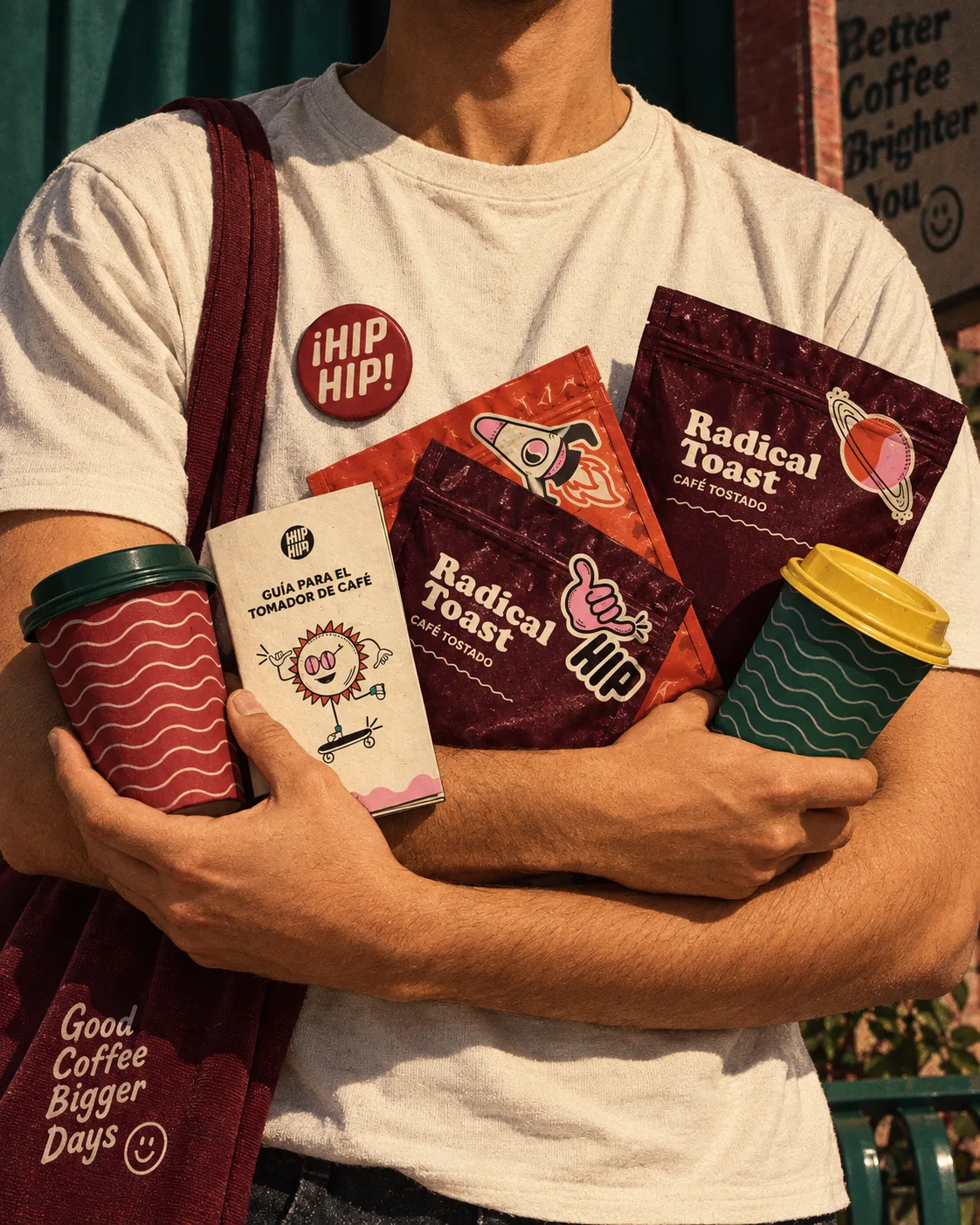
Most brand checklists stop at logo and colors. That's the surface. What actually determines whether a brand holds up under scale, retail negotiations, and three rounds of packaging redesign is the system underneath it. This is that system, broken into the technical specs founders usually only learn after getting burned once.
1. Strategic Foundation (Before Any Design Work Starts)
- Positioning statement written and stress-tested: category, target customer, key benefit, reason to believe, in one paragraph, not a mood board.
- Competitive mapping done across at least two axes, such as price versus indulgence or convenience versus craft, not just a list of who else sells similar products.
- Brand architecture decided upfront: single masterbrand, house of brands, or endorsed sub-brands, because retrofitting this later means redesigning every SKU.
- Category codes identified and a deliberate choice made to either follow them, so customers recognize the category fast, or break them, so you stand out, not an accidental mix of both.
- Customer research documented: at minimum, 15 to 20 interviews or a survey with a real sample size, not just founder intuition dressed up as insight.
- Price-tier signaling defined: does the identity need to read as mass, premium, or masstige, since design decisions downstream, including paper stock, color saturation, and type weight, all follow from this.
2. Naming, Trademark, and Legal
- Name tested for phonetic clarity across Hindi, Tamil, Telugu, Kannada, and Bengali at minimum, given India's linguistic spread.
- Trademark search conducted in the relevant NICE classification, such as Class 29, 30, or 32 for most F&B, not just a Google search.
- Trademark application filed before public launch, not after your first viral moment invites copycats.
- Domain, .in variant, and at least three social handles secured and matching, with mismatched handles across platforms treated as a real erosion of trust.
- FSSAI license number and format requirements confirmed for packaging before final print files are locked.
- Legal Metrology Act compliance checked: MRP display, net quantity, manufacturer address, and batch or date coding placement are all regulated, not stylistic choices.
- Name and tagline checked against existing registered trademarks in adjacent categories, since F&B trademark disputes are common and expensive.
3. Visual Identity System (Technical Specs)
- Logo built and delivered in vector format, including AI, EPS, or SVG, not just a PNG export from Canva.
- Logo tested at minimum clear space and minimum size specifications, documented in points or millimeters, not simply described as looking fine to me.
- Primary logo, secondary or lockup version, and icon-only mark all exist, since packaging, favicon, and app icon each need different formats.
- Color system specified in four modes: Pantone for offset print, CMYK for digital print, RGB for screens, and HEX for web, because a color that looks right on your MacBook can print muddy on a flexo press.
- Primary and secondary palette limited and documented with exact codes, not brand green with no reference value.
- Color accessibility checked for contrast ratio, with WCAG AA minimum of 4.5:1 for body text where the brand has digital-first touchpoints.
- Typography system specifies primary and fallback web fonts, with font licensing confirmed for commercial packaging and digital use.
- Type scale documented: heading sizes, body sizes, line height, so packaging designers and web developers aren't guessing.
- Grid system or layout logic defined for packaging and digital, even a simple one, so future SKUs don't get reinvented from scratch.
- Photography style guide exists: lighting temperature, background treatment, prop usage, crop ratios, and a no-new-photographer rule without a briefing call every time.
- Iconography or illustration style, if used, is documented with stroke weight, corner radius, and fill rules.
4. Packaging (Regulatory and Production Specs)
- Dieline finalized and tested with an actual physical prototype, not just a 3D render, since folds and seams behave differently than mockups suggest.
- Substrate and finish chosen with shelf life in mind: barrier properties for moisture-sensitive products such as namkeens and cookies, and UV protection for light-sensitive products such as oils and dairy.
- Print method identified early: offset, flexo, gravure, or digital, since color accuracy, minimum order quantities, and cost per unit vary significantly across methods.
- Mandatory label elements confirmed and positioned: FSSAI logo and number, nutritional information, allergen declarations, vegetarian or non-vegetarian mark, MRP, net quantity, batch number, manufacturing and expiry dates, and manufacturer or importer address.
- Barcode, such as GS1 India registered, placed with the correct quiet zone and tested for scannability at point of sale.
- Packaging tested under real retail conditions: stacking, shelf lighting, and proximity to competitor SKUs, not just on a clean studio table.
- Variant differentiation system defined, such as color-coding by flavor or iconography by size, so SKU expansion doesn't require redesigning the whole line.
- Sustainability claims verified, with material and evidence matched against the actual composition, since greenwashing claims now draw regulatory and consumer scrutiny.
5. Voice, Messaging, and Content Systems
- Brand voice defined across at least three dimensions, such as formal to casual, serious to playful, and expert to peer, not just a list of adjectives.
- Messaging hierarchy documented: primary value proposition, three supporting proof points, and a tagline, so every piece of copy traces back to the same core argument.
- Tone modulation guide exists for different contexts, including customer complaint response versus Instagram caption versus investor deck, since one voice does not mean one tone everywhere.
- House style guide covers grammar and mechanics specific to the brand: Oxford comma or not, how numbers are written, and whether the brand name itself is capitalized and used consistently.
- Glossary of terms the brand uses consistently, including own names for signature products and category language, versus terms it avoids.
- Content pillars defined and mapped to business goals, not just post five times a week.
6. Digital and Technical Infrastructure
- Website built on a stack that supports expected traffic and checkout volume, tested under load, not just under the founder's own browsing.
- Page speed benchmarked on 4G or 3G conditions specifically, given actual Indian mobile network variance, using a tool such as PageSpeed Insights or GTmetrix.
- Structured data and metadata implemented for search visibility, including schema markup for products and recipes where applicable.
- Design system componentized: buttons, forms, and cards documented once and reused, not rebuilt per page.
- Brand assets stored with version control: source files, exports, and guidelines separated, with version control so nobody's designing off an outdated logo file.
- Social templates technically specified: image dimensions per platform, safe zones for Reels and Stories text, and video aspect ratios, since guessing per post wastes production time.
7. Governance and Scale Readiness
- Brand guidelines document exists as a single source of truth, whether as a PDF or Notion doc, covering every section above, versioned and dated.
- Approval workflow defined for new packaging, campaigns, or partnerships, so brand consistency doesn't depend on the founder personally reviewing every asset.
- Onboarding material exists for new designers, agencies, or hires, so brand knowledge doesn't live only in the founder's head.
- Brand audit scheduled at a fixed cadence, every six to twelve months, to check consistency across all live touchpoints, not just when something looks off.
- Extension rules defined: what a new product line, co-brand, or limited edition is and isn't allowed to change about the core identity.
The Real Test
Pull your packaging dieline, your brand guideline document, and your last five Instagram posts. If a new hire could design the next SKU or write the next caption using only what's documented, the system works. If they'd need to ask you directly, the checklist above has not yet become a system.
This is the difference between a brand that survives its first big retail order and one that falls apart the moment its founder isn't doing every design review.